Saturday, October 5, 2013

A Spotted Sandpiper along the Charles River is Bird #174 for the Year


Fall colors were on display along the Charles River in Newton and Waltham. Image copyright Daniel E. Levenson 2013.
 
Over the past week I've managed to get out and do a little more birding by kayak on Lake Cohituate in Natick and the on the Charles River in Newton. Both times I've brought my camera along and on each outing I've been able to get quite close to a number of very striking birds, including a Black-Crowned Night Heron (found perched in the same place I saw one mentioned in my last post), several brightly-colored male Wood Ducks, an Osprey and  a Spotted Sandpiper.

A Painted Turtle sits on a half-submerged log on Lake Cochituate in Natick, enjoying the last few rays of summer sunshine. Image copyright Daniel E. Levenson 2013.
Paddling around Lake Cochituate I saw fewer birds than my previous trip, but there was still plenty to see, including the Painted Turtle in the photo above. There was also a raucous chorus of Blue Jays in the trees and many Mallards out on the water. The absence of the sound of Gray Catbirds was also noteworthy - perhaps they've already begun their migration.

A Spotted Sandpiper hunts for food along the muddy banks of the Charles River in Waltham, Massachusetts. Image copyright Daniel E. Levenson 2013.
While paddling on the Charles River this past week I added a Spotted Sandpiper to my year list, bringing my total to 174 species. At this point it would be practically impossible to get my New England big year list up to 300 species, but I am hoping to hit at least 200 species for the year in New England, which should be an attainable goal if I get out this fall and early winter in search of Finches, Snowy Owls, etc. With one trip abroad planned before December 31 I's hoping to hit at least 210 for my personal year total. Either way it's been a fun project and down the road I would defintiely consider attempting another "big year," most likely within tighter parameters - i.e., only in Massachusetts or only for a month.


A Great Blue Heron sits perched on some branches along the Charles River in Newton, MA. Image copyright Daniel E. Levenson 2013.
I have to admit that as much as I've enjoyed being able to be out in the woods without wearing many layers of clothing that birding in the warm weather can be just as challenging as birding when it's cold outside. This is one of the wonderful things about New England - last March when I had taken just about all I could handle of blizzards, ice and freezing winds I was ready for warm nights, sunshine and a steady stream of Warblers and now that I've endured a summer full of biting insects, sunburn and dehydration I'm more than ready to throw on an extra layer or two and head out to look for wintering sea ducks, Snowy Owls and Finches. I suppose that just like the birds themselves that birders have seasonal patterns too.


Thanks for reading.

Copyright Daniel E. Levenson 2013.

Saturday, September 28, 2013

Fall Birding by Kayak Brings My Year List to 173 Species


A kayak is a wonderful tool for birding and photography, allowing birders to move quietly along wetlands, ponds and rivers without disturbing wildlife. Image copyright Daniel E. Levenson 2013.
It's been a busy summer, and while I have managed to get outdoors a decent amount, I've had practically no time to update this blog. Suffice it to say I added no new species in July or August, but recently I managed to get out on the Charles River in a kayak for a couple of hours and was delighted to not only add a Black-Crowned Night Heron to my year list, but to see many other species of birds as well, including many Wood Ducks, at least 5 Great Blue Herons, two rather noise Belted Kingfishers chattering loudly as they swooped down to grab small fish and then return again briefly to the dead branch of a tree stick up out of the water.

I heard many racuous American Crows and Blue Jays calling so I kept alert for signs of raptors-  I did see one hawk circling high overhead, likely a Red-tailed Hawk, but too far off for me to definitively ID without binoculars. The best find of the day, however, was definitely the Black-crowned Night Heron, a normally quite secretive species that I found perched at the edge of the river on the branches of a half-submerged tree. The heron was not skittish at all and as I drifted past I was able to get a photo with my phone before it took off.

A Black-crowned Night Heron perches in a branch sticking up out of the Charles River in Newton, Massdachusetts. Image Copyright Daniel E. Levebnson 2013

 I spent the rest of my time paddling into hidden pockets and back behind the edges of lilly pad fields, in search of more ducks and wading birds. It was nice to gert back out not only on the water but to do a little more serious birding than I've had the time to attempt this past sumnmer. Hopefully this Fall will bring more birding adventure, which I will of course write about here.

Thanks for reading.

Copyright Danniel E. Levenson 2013.

Sunday, July 21, 2013

An abundance of birds, despite the heat


A male Northern Cardinal pauses on a branch to survey the shrubbery around it. Image copyright Daniel E. Levenson 2013.

With seemingly endless heat and humidity battering New England for the last few weeks I haven't spent too much time out in the field exploring and birding. Today, however,I managed to get out to Broadmoor Wildlife Sanctuary in Natick, Massachusetts where with a little effort I managed to find a number of species which seemed undaunted by the intense summer weather. When the temperature rises many animals will minimize activity and seek out ways to keep themselves cool, and humans are no exception, so today I made sure to drink plenty of water, wore a hat, sunglasses and sunscreen, and focused on moving more slowly. I focused on taking the time to examine promising little pockets of habitat where I though birds might be have gone to seek shade or look for food at this time of year. Although many birders prefer to look for shorebirds (or engage in other activities altogether) during the hottest part of the year, this is actually a great time for the birds themselves. Between the cover provided by thickening vegetation and the abundant supply of bugs, berries and seeds, the middle of summer is proabbly a pretty good time to be a songbird.


By mid-July fields and meadows throughout New England are often covered in thick vegetation, providing ideal habitat for a wide range of insects and bird species. Image copyright Daniel E. Levenson 2013.
This afternoon I was lucky enough to stumble upon one really nice spot right at the intersection of the forest and meadow where I stopped to listed to a pair of Northern Cardinal calling and soon added ten more species my list for the day, including two Gray Catbirds which were quite loud and whiny as they attempted repeatedly to land in a tree the cardinals seemed to have claimed as their own. The tree in question was covered with berries, and as the cardinals chased off the interloping catbirds I watched as a Song Sparrow pulled a berry loose from a branch and attempted to eat it - unfortunately for this hapless bird the berry proved to be too big for its bill and the berry dropped from its grip and disappeared into the tall grass below. While standing in this same spot a Blue-Gray Gnatcather also showed up, moving frenetically from the very tip of one branch to another, searching for tiny insects, and a female Common Yellowthroat also arrived, hanging around long enough for me to get a really good look at the a species where the male is much more striking and easily recognized.

I finished up by exploring another meadow where the plants and grasses had shot up to head level, providing convenient cover as I scanned the open areas above the field, looking for additional birds. After a while the humidity and Deer Flies began to take their toll and I headed home, already thinking of fall migration and cooler days but eager not to let the hidden pleasures and surprises of summer birding slip away just yet.

Thanks for reading.

Copyright Daniel E. Levenson 2013.


Thursday, June 27, 2013

Birding Pawtuckaway State Park in Nottingham, New Hampshire


A Cedar Waxwing perches on an exposed branch at the top of a steep hill in Pawtuckaway State Park in Nottingham, New Hampshire. Image copyright Daniel E. Levenson 2013.
During a recent birding day trip to Pawtuckaway State Park and the surrounding area with a group from Mass Audubon's Drumlin Farm wildlife sanctuary I couldn't help thinking back to those chilly days in January and February when I slogged through frozen wetlands, waded through snow drifts and scanned the freezing surf for scoters and other ducks. Where once there was windburn, ice and frozen sand we now had humidity, mosquitoes and the looming possibility of pop-up thunderstorms to consider.
Fortunately, though, we got an occasional breeze and the presence of so many exciting birds definitely helped to take my mind off the occasional dark cloud overhead.

We started out by visiting a lovely wetland area along a side road somewhere south of Pawtuckaway State Park, where we scanned the thick green vegetation and surrounding forest. On one side of the road there was a large, shallow pond, brimming with weeds. Here we saw a female Wood Duck in the distance, moving slowly and almost indisit6nguishiable amidst the tangle of Lilly pads around her, a White-tailed Deer wading against the far shore and in the trees on the opposite bank Great-crested Fly Catchers, a Scarlet Tanager and a pair of Red-bellied Woodpeckers which swooped in overhead, landing in a tall tree by the edge of the road. Although the wetlands looked like prime terrirotry for Virginia Rail we didn't see any there, although I suspect that there must have been one or two tucked away deep in the vegetation, staying safely out of sight.

In early summer wetlands like the one above in southern New Hampshire are excellent spots to look for rails and other marsh birds. Image copyright Daniel E. Levenson 2013.
It was also at this location where I added two more species to my year list - an Eastern Wood Peewee and the Scarlet Tanager. Throughout the day we heard and saw a number of peewee's, which was great since I have been working on improving my birding by ear skills, which are somewhere between non-existent and pretty bad at this stage. Nonetheless, the peewee and a few other thoughtful birds became my teachers for the day, and with the expert guidance of our trip leader, Strickland Wheelock, I actually managed to learn to identify at least 3 more species by ear, which was really nice. This is definitely one of the major advantages of the Mass Audubon birding trips, that you not only get to see a lot of birds but you can always learn something new as well.

Our next stop was a power line cut near the state park where I added three more species to my year list: Field Sparrow, Indigo Bunting and Prairie Warbler. I have written here before that in my opinion the Bobolink has the coolest songs in the avian world, but after listening to the Prairie Warbler I may have to rethink that assertion. If you've never heard it I highly recommend taking a listen to its call and song. We heard several of these talented singers as we hiked a little way down the power line road,where we were also treated to great views of a swirling kettle of Turkey Vultures and a lone Broad-winged Hawk.


This fire tower sits atop a hill at Pawtuckaway State Park in Nottingham, New Hampshire and is surrounded by a variety of bird feeders. Image copyright Daniel E. Levenson 2013.
We spent the rest of the day exploring the state park, driving along the narrow dirt roads with the windows down and stopping to look for birds as we went. Using this technique we found a number of very productive places, including a beaver pond and wetland where a Virginia Rail came within a few feet of our group, as well as several American Redstart, two Louisiana Waterthrush and a forested areas that produced both Blue-headed Vireo and Yellow-throated Vireo, two very striking birds and a lot of fun to watch as they moved quickly through the canopy overhead. We also hiked up to the top of a steep hill where we ate lunch and watched numerous Purple Finches and Ruby-throated Hummingbirds visit a multitude of feeders that surrounded a fire tower. It was in this spot that I also saw my first Common Raven of the year. By the end of the day I had added 11 more species to my New England birding big year list, bringing the total to date to 172 species seen. This was my first serious birding effort in the Granite State, and with so many beaver ponds, wetlands, forests and mountains to explore up there I'm looking forward to doing more.

Thanks for reading.

Copyright Daniel E. Levenson 2013.
 

Saturday, June 15, 2013

A look at some of the birds and blooms of Harpswell, Maine


A whirling wooden loon sits on a railing at a gift shop at Land's End in Harpswell, Maine. Image copyright Daniel E. Levenson 2013.
I recently spent a little time birding along the beaches and craggy coves of southern Maine, in and around the Harpswell area. While I didn't add any new species to my year list (or see a moose) I did enjoy looking out at the waters of Casco Bay, watching male and female Common Ediers resting in the surf and on small islands, and generally exploring the winding roads of Cumberland County.


A Song Sparrow sings with the ocean in the background. Image copyright Daniel E. Levenson 2013.

We started off with a windy, slightly rainy morning of casual birding at Land's End, a gorgeous spot at the very tip of Bailey Island in the town of Harpswell. Here we walked along a short section of rocky beach looking out at the gently rolling waves and rocky little islands in the distance while we listened to the serenade of Song Sparrows perched prominently atop shrubs and Yellow Warblers hidden in the brush.

Even on a cloudy day the beauty of Maine's rugged coastline comes through. In the photo above a statue dedicated to the fisherman of the state can also be seen. Image copyright Daniel E. Levenson 2013.

With gray skies overhead this Lupine added a little color to the day. Image copyright Daniel E. Levenson 2013.
In addition to the 18 species of birds we saw during our two days in the Brunswick area we were also lucky enough to see the Lupine in bloom in gardens, fields and along the roadside. Sometimes it's all too easy to focus only on one aspect of the natural world, whether its birds, bugs or weather and lose track of all of the other amazing things out there waiting to be found. Most of the time we were surrounded by a sea of green trees or the ocean, but then we would come across something like the Lupines in the photo above and it would remind me to take a closer look around. Always a valuable lesson in the outdoors.

We ended our evening with dinner at a fantastic restaurant out at the end of South Harpswell called Dolphin Marina and Restaurant. I would have given this place a major thumbs up for the view alone, but the food was also delicious and the service was great. As a birder I also appreciated being able to sit next to a giant window looking out at the bay and beach and having the chance to watch a Great Blue Heron fly back and forth, silhouetted against the sunset.

The sun sets over Casco Bay at the end of South Harpswell, Maine. Image Copyright Daniel E. Levenson 2013.
Thanks for reading.

Copyright Daniel E. Levenson 2013.


Sunday, June 2, 2013

Up close with the herons and a Blue-Gray Gnatcatcher brings my current big year total to 160 species

A Great Blue Heron stalks the marsh at Great Meadows national wildlife refuge in Concord, Massachusetts. Image copyright Daniel E. Levenson 2013.

Despite the uncomfortable heat and humidity I felt compelled to get outside this morning and continue my New England birding big year effort. So this morning I brought along plenty of water and sunscreen and sweated my way through a long 2 1/2 hour walk at Great Meadows National Wildlife Refuge in Concord, Massachusetts. Most of the birds didn't seem to mind the weather at all, and there was a lot of activity to observe, from vociferous Yellow Warblers to an Osprey hunting high above the impoundment to Song Sparrows picking caterpillars and other bugs from leafy treetops. The sky overhead was clear and bright and sunlight reflected off the water all around me, making it hard to see some of the ore distant birds, but I did get to see a number of brightly-colored male Red-winged Blackbirds and Great Blue Herons fishing in the shallows.

A great Blue Heron balances atop a tilted bird box at Great Meadows NWR. Image copyright Daniel E. Levenson 2013.
As the day heated up I made my along the dyke path and then turned left, following the river toward a small pond I have visited before. It was along this path that bird number 160 showed up - a Blue-gray Gnatcatcher, moving quickly from branch to branch, stopping only momentarily before taking flight again. There were also lots of great plants and wildflowers blooming all over the place.

These daisies were growing wild at Great Meadows NWR. Image copyright Daniel E. Levenson 2013.
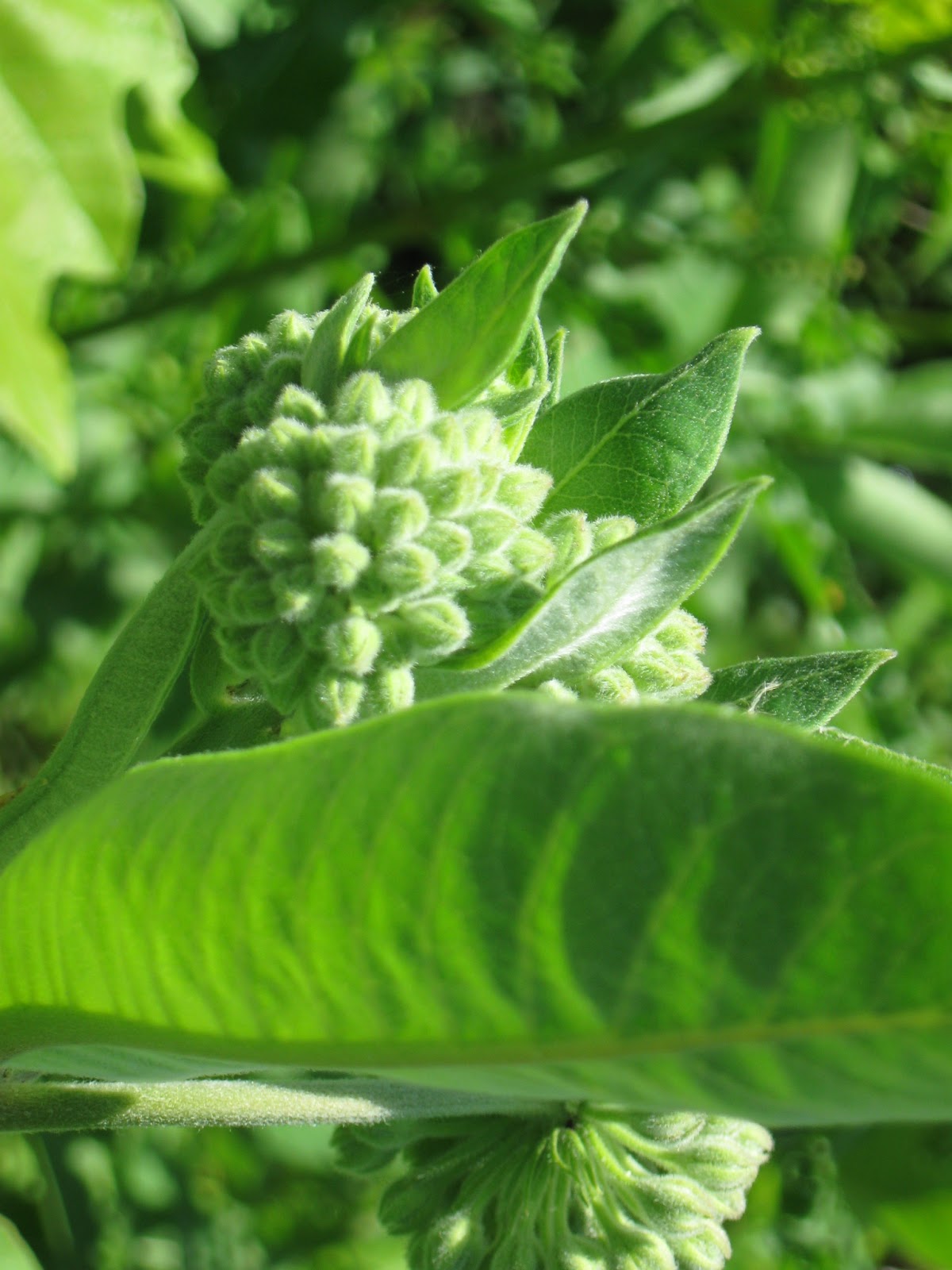
When it comes to plant ID I have to admit I know very little - if any gardeners or plant enthusiasts out there can help ID the plants in the images below I would love to hear from you.


I thought this might be some kind of Milkweed, but I'm not really sure. Image copyright Daniel E. Levenson 2013.
I found these flowers growing in a strip of woods between the river and the main trail at Great Meadows NWR. Image copyright Daniel E. Levenson 2013.

Thanks for reading.

Copyright Daniel E. Levenson 2013.

Friday, May 31, 2013

It's a bird, it's a bee..... nope, it's a Hummingbird Moth


This Common Clearwing moth, also known as a Hummingbird Moth, was photographed gathering nectar from flowers at Stony Brook WLS in Norfolk, MA. Image copyright Daniel E. Levenson 2013.
Covered in sunscreen, fully hydrated and with hat and sunglasses on, I ventured out for a short while this afternoon to do a little birding south of Boston in the towns of Easton and Norfolk Massachusetts. This afternoon I definitely felt very far away from those frozen days in January and February when I was piling on layers of fleece and wool and trudging through snow and ice, chasing after wintering sea ducks and mixed flocks of kinglets and chickadees.

While I didn't add any species to my year list I did see a number of unexpected things along the way, including the moth in the photo above. This fascinating insect, often called a Hummingbird Moth for the superficial resemblance it bears to hummingbirds, is actually more accurately known as the Common Clearwing.  I came across this one at Stoney Brook Wildlife Sanctuary in Norfolk, as it was gathering nectar from flowers beside a shady path. They are definitely one of the most unusual visitors to show up in gardens and forests in New England in the summer. If you would like to learn more about them you can check out this Mass Audubon webpage.This site from the US Forest Service also offers details on the life history of these moths and tips on how to identify them.

At Old Pond in Easton I spotted a Baltimore Oriole and two high-flying Red-tailed Hawks taking advantage of the thermals way up among the clouds, as well as two Yellow Warblers and a Chimney Swift. I was only there a short while it was a beautiful place to stop and check for wildlife.I spent more time at Stony Brook WLS where I moved slowly in the afternoon humidity, taking care not to get dehydrated as I hunted for wading birds at the edges of the wetlands. While I was there I saw two female Wood Ducks, a number of Great Blue Heron and many of the other usual birds I would expect to see there this time of year. The moths, butterflies and dragonflies defintiely stole the show today though, with several very colorful dragonflies flying maddeningly just beyond the range of my camera. I did manage to get a shot of an Eastern Pond Hawk dragonfly taking a rest on the stem of a plant. These bright green insects are fierce predators, catching and eating other bugs, including butterflies.

An Eastern Pondhawk dragonfly at rest. Image copyright Daniel E. Levenson 2013.

If you've never spent any time looking closely at dragonflies or damselflies I highly recommend it. They display an impressive range of coloration and behaviors and are an important link in the food chain both as predators and prey, so the next time your out hiking or birding or just enjoying nature take a minute to look at the moths, butterflies and dragonflies around you - I bet you'll be glad you did.

Thanks for reading.

Copyright Daniel E. Levenson 2013.