Thursday, June 27, 2013

Birding Pawtuckaway State Park in Nottingham, New Hampshire


A Cedar Waxwing perches on an exposed branch at the top of a steep hill in Pawtuckaway State Park in Nottingham, New Hampshire. Image copyright Daniel E. Levenson 2013.
During a recent birding day trip to Pawtuckaway State Park and the surrounding area with a group from Mass Audubon's Drumlin Farm wildlife sanctuary I couldn't help thinking back to those chilly days in January and February when I slogged through frozen wetlands, waded through snow drifts and scanned the freezing surf for scoters and other ducks. Where once there was windburn, ice and frozen sand we now had humidity, mosquitoes and the looming possibility of pop-up thunderstorms to consider.
Fortunately, though, we got an occasional breeze and the presence of so many exciting birds definitely helped to take my mind off the occasional dark cloud overhead.

We started out by visiting a lovely wetland area along a side road somewhere south of Pawtuckaway State Park, where we scanned the thick green vegetation and surrounding forest. On one side of the road there was a large, shallow pond, brimming with weeds. Here we saw a female Wood Duck in the distance, moving slowly and almost indisit6nguishiable amidst the tangle of Lilly pads around her, a White-tailed Deer wading against the far shore and in the trees on the opposite bank Great-crested Fly Catchers, a Scarlet Tanager and a pair of Red-bellied Woodpeckers which swooped in overhead, landing in a tall tree by the edge of the road. Although the wetlands looked like prime terrirotry for Virginia Rail we didn't see any there, although I suspect that there must have been one or two tucked away deep in the vegetation, staying safely out of sight.

In early summer wetlands like the one above in southern New Hampshire are excellent spots to look for rails and other marsh birds. Image copyright Daniel E. Levenson 2013.
It was also at this location where I added two more species to my year list - an Eastern Wood Peewee and the Scarlet Tanager. Throughout the day we heard and saw a number of peewee's, which was great since I have been working on improving my birding by ear skills, which are somewhere between non-existent and pretty bad at this stage. Nonetheless, the peewee and a few other thoughtful birds became my teachers for the day, and with the expert guidance of our trip leader, Strickland Wheelock, I actually managed to learn to identify at least 3 more species by ear, which was really nice. This is definitely one of the major advantages of the Mass Audubon birding trips, that you not only get to see a lot of birds but you can always learn something new as well.

Our next stop was a power line cut near the state park where I added three more species to my year list: Field Sparrow, Indigo Bunting and Prairie Warbler. I have written here before that in my opinion the Bobolink has the coolest songs in the avian world, but after listening to the Prairie Warbler I may have to rethink that assertion. If you've never heard it I highly recommend taking a listen to its call and song. We heard several of these talented singers as we hiked a little way down the power line road,where we were also treated to great views of a swirling kettle of Turkey Vultures and a lone Broad-winged Hawk.


This fire tower sits atop a hill at Pawtuckaway State Park in Nottingham, New Hampshire and is surrounded by a variety of bird feeders. Image copyright Daniel E. Levenson 2013.
We spent the rest of the day exploring the state park, driving along the narrow dirt roads with the windows down and stopping to look for birds as we went. Using this technique we found a number of very productive places, including a beaver pond and wetland where a Virginia Rail came within a few feet of our group, as well as several American Redstart, two Louisiana Waterthrush and a forested areas that produced both Blue-headed Vireo and Yellow-throated Vireo, two very striking birds and a lot of fun to watch as they moved quickly through the canopy overhead. We also hiked up to the top of a steep hill where we ate lunch and watched numerous Purple Finches and Ruby-throated Hummingbirds visit a multitude of feeders that surrounded a fire tower. It was in this spot that I also saw my first Common Raven of the year. By the end of the day I had added 11 more species to my New England birding big year list, bringing the total to date to 172 species seen. This was my first serious birding effort in the Granite State, and with so many beaver ponds, wetlands, forests and mountains to explore up there I'm looking forward to doing more.

Thanks for reading.

Copyright Daniel E. Levenson 2013.
 

Saturday, June 15, 2013

A look at some of the birds and blooms of Harpswell, Maine


A whirling wooden loon sits on a railing at a gift shop at Land's End in Harpswell, Maine. Image copyright Daniel E. Levenson 2013.
I recently spent a little time birding along the beaches and craggy coves of southern Maine, in and around the Harpswell area. While I didn't add any new species to my year list (or see a moose) I did enjoy looking out at the waters of Casco Bay, watching male and female Common Ediers resting in the surf and on small islands, and generally exploring the winding roads of Cumberland County.


A Song Sparrow sings with the ocean in the background. Image copyright Daniel E. Levenson 2013.

We started off with a windy, slightly rainy morning of casual birding at Land's End, a gorgeous spot at the very tip of Bailey Island in the town of Harpswell. Here we walked along a short section of rocky beach looking out at the gently rolling waves and rocky little islands in the distance while we listened to the serenade of Song Sparrows perched prominently atop shrubs and Yellow Warblers hidden in the brush.

Even on a cloudy day the beauty of Maine's rugged coastline comes through. In the photo above a statue dedicated to the fisherman of the state can also be seen. Image copyright Daniel E. Levenson 2013.

With gray skies overhead this Lupine added a little color to the day. Image copyright Daniel E. Levenson 2013.
In addition to the 18 species of birds we saw during our two days in the Brunswick area we were also lucky enough to see the Lupine in bloom in gardens, fields and along the roadside. Sometimes it's all too easy to focus only on one aspect of the natural world, whether its birds, bugs or weather and lose track of all of the other amazing things out there waiting to be found. Most of the time we were surrounded by a sea of green trees or the ocean, but then we would come across something like the Lupines in the photo above and it would remind me to take a closer look around. Always a valuable lesson in the outdoors.

We ended our evening with dinner at a fantastic restaurant out at the end of South Harpswell called Dolphin Marina and Restaurant. I would have given this place a major thumbs up for the view alone, but the food was also delicious and the service was great. As a birder I also appreciated being able to sit next to a giant window looking out at the bay and beach and having the chance to watch a Great Blue Heron fly back and forth, silhouetted against the sunset.

The sun sets over Casco Bay at the end of South Harpswell, Maine. Image Copyright Daniel E. Levenson 2013.
Thanks for reading.

Copyright Daniel E. Levenson 2013.


Sunday, June 2, 2013

Up close with the herons and a Blue-Gray Gnatcatcher brings my current big year total to 160 species

A Great Blue Heron stalks the marsh at Great Meadows national wildlife refuge in Concord, Massachusetts. Image copyright Daniel E. Levenson 2013.

Despite the uncomfortable heat and humidity I felt compelled to get outside this morning and continue my New England birding big year effort. So this morning I brought along plenty of water and sunscreen and sweated my way through a long 2 1/2 hour walk at Great Meadows National Wildlife Refuge in Concord, Massachusetts. Most of the birds didn't seem to mind the weather at all, and there was a lot of activity to observe, from vociferous Yellow Warblers to an Osprey hunting high above the impoundment to Song Sparrows picking caterpillars and other bugs from leafy treetops. The sky overhead was clear and bright and sunlight reflected off the water all around me, making it hard to see some of the ore distant birds, but I did get to see a number of brightly-colored male Red-winged Blackbirds and Great Blue Herons fishing in the shallows.

A great Blue Heron balances atop a tilted bird box at Great Meadows NWR. Image copyright Daniel E. Levenson 2013.
As the day heated up I made my along the dyke path and then turned left, following the river toward a small pond I have visited before. It was along this path that bird number 160 showed up - a Blue-gray Gnatcatcher, moving quickly from branch to branch, stopping only momentarily before taking flight again. There were also lots of great plants and wildflowers blooming all over the place.

These daisies were growing wild at Great Meadows NWR. Image copyright Daniel E. Levenson 2013.
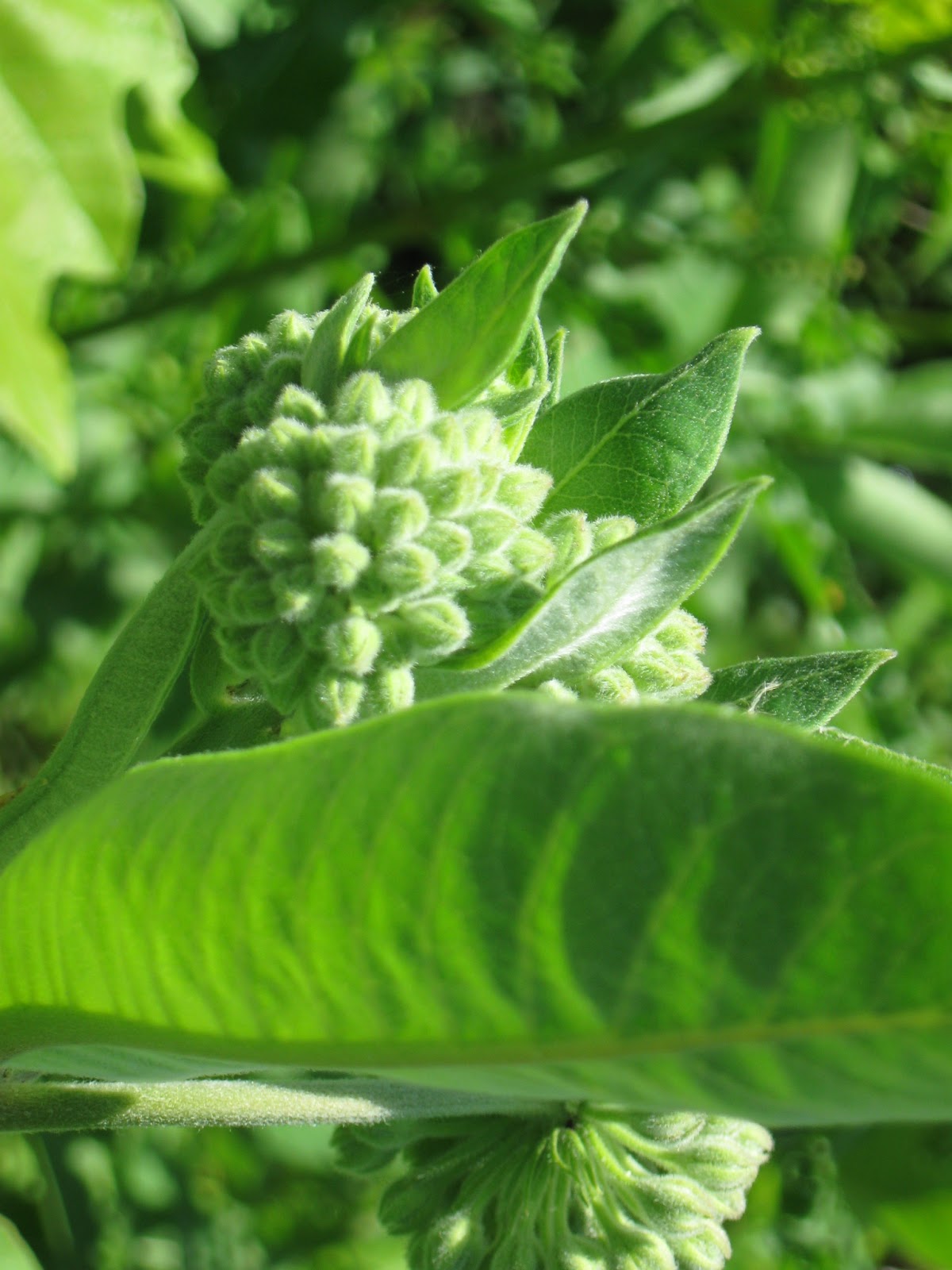
When it comes to plant ID I have to admit I know very little - if any gardeners or plant enthusiasts out there can help ID the plants in the images below I would love to hear from you.


I thought this might be some kind of Milkweed, but I'm not really sure. Image copyright Daniel E. Levenson 2013.
I found these flowers growing in a strip of woods between the river and the main trail at Great Meadows NWR. Image copyright Daniel E. Levenson 2013.

Thanks for reading.

Copyright Daniel E. Levenson 2013.

Friday, May 31, 2013

It's a bird, it's a bee..... nope, it's a Hummingbird Moth


This Common Clearwing moth, also known as a Hummingbird Moth, was photographed gathering nectar from flowers at Stony Brook WLS in Norfolk, MA. Image copyright Daniel E. Levenson 2013.
Covered in sunscreen, fully hydrated and with hat and sunglasses on, I ventured out for a short while this afternoon to do a little birding south of Boston in the towns of Easton and Norfolk Massachusetts. This afternoon I definitely felt very far away from those frozen days in January and February when I was piling on layers of fleece and wool and trudging through snow and ice, chasing after wintering sea ducks and mixed flocks of kinglets and chickadees.

While I didn't add any species to my year list I did see a number of unexpected things along the way, including the moth in the photo above. This fascinating insect, often called a Hummingbird Moth for the superficial resemblance it bears to hummingbirds, is actually more accurately known as the Common Clearwing.  I came across this one at Stoney Brook Wildlife Sanctuary in Norfolk, as it was gathering nectar from flowers beside a shady path. They are definitely one of the most unusual visitors to show up in gardens and forests in New England in the summer. If you would like to learn more about them you can check out this Mass Audubon webpage.This site from the US Forest Service also offers details on the life history of these moths and tips on how to identify them.

At Old Pond in Easton I spotted a Baltimore Oriole and two high-flying Red-tailed Hawks taking advantage of the thermals way up among the clouds, as well as two Yellow Warblers and a Chimney Swift. I was only there a short while it was a beautiful place to stop and check for wildlife.I spent more time at Stony Brook WLS where I moved slowly in the afternoon humidity, taking care not to get dehydrated as I hunted for wading birds at the edges of the wetlands. While I was there I saw two female Wood Ducks, a number of Great Blue Heron and many of the other usual birds I would expect to see there this time of year. The moths, butterflies and dragonflies defintiely stole the show today though, with several very colorful dragonflies flying maddeningly just beyond the range of my camera. I did manage to get a shot of an Eastern Pond Hawk dragonfly taking a rest on the stem of a plant. These bright green insects are fierce predators, catching and eating other bugs, including butterflies.

An Eastern Pondhawk dragonfly at rest. Image copyright Daniel E. Levenson 2013.

If you've never spent any time looking closely at dragonflies or damselflies I highly recommend it. They display an impressive range of coloration and behaviors and are an important link in the food chain both as predators and prey, so the next time your out hiking or birding or just enjoying nature take a minute to look at the moths, butterflies and dragonflies around you - I bet you'll be glad you did.

Thanks for reading.

Copyright Daniel E. Levenson 2013.


Sunday, May 26, 2013

Welcoming native plants into your yard

Pink Lady Slipper is a species of orchid found growing in semi-shaded woods throughout Massachusetts. Image copyright Daniel E. Levenson 2013.


Although birds are often a featured subject of this blog my interests in the natural world also extend far beyond our feathered friends. As we come to the end of spring and move toward summer I also plan to write about the reptiles, amphibians, mammals and insects I come across in my outdoor adventures. As someone who tries to look at not just the constituent parts of different habitats but how they all fit together into larger ecosystems,  I am also deeply interested in the plants and plant communities which anchor these habitats, often providing the food, shelter and other resources that creatures from Bark Beatles to Beavers need to survive.

Milkweed is a commonly seen plant native to New England and is an important source of food for butterflies. Image copyright Daniel E. Levenson 2013.
I also love the idea of gardening and landscaping in suburban environments which not only encourages local wildlife to visit backyards, but also places an emphasis on native plants and perhaps restoring a little wilderness to the otherwise drab uniformity which has come to symbolize many of the yards and parks in our cities and towns. In today''s post I would like to share some links to online resources where you can learn more about native plant life in New England and perhaps suggest a few ideas which might make your backyard more enticing to wildlife. Please note that mention below of  any specific business or organizations should not be taken as an endorsement.


A home for butterflies and moths

Everyone loves butterflies - these brightly colored creatures are sure sign of spring and summer, lending vitality to any garden. There are also many beautiful moths that can be found frequenting open meadows and city parks. I have seen several purpose-built butterfly gardens over the years and always been impressed with the variety of native plant species growing in them. if you would like to attract butterflies to your yard in Massachusetts you might want to visit the website of the Massachusetts Butterfly Club
which also features a dedicated section on creating and maintaining a butterfly garden. 

An Eight-Spotted Forester Moth (Alypia octomaculata) takes a break at Moose Hill Wildlife Sanctuary in Sharon, MA. Image copyright Daniel E. Levenson 2012.
If you live in northern New England you may want to check out this website from the University of Maine on how to create a welcoming environment for these colorful insects. This site also features an overview of the life history of butterflies, some very nice photos and lists the families commonly found in the state, including swallowtail and monarch. if you're looking for some inspiration, you can also check out this article written by Aislinn Sarnacki in the Bangor Daily News, where she describes a number of butterfly gardens that people have created in and around Bangor, Maine.

Putting out the welcome mat for our amphibian friends

Frogs, toads and salamanders are an integral part of a variety of different kinds of New England, they also provide a valuable service by eating many thousands of pest insects every year. They can also be great to look for, as finding them usually requires slogging around in marshes, turning over rotten logs and all kinds of other joyous muddy activities.

If you would like to attract frogs to your yard your best bet is to create a frog-friendly pond with plenty of cover, a sloped bottom and no fish. Moving adult frogs or tadpoles is often not a good idea - if you create the right environment, and have patience, experts say the frogs will eventually find the home you have built for them. Image copyright Daniel E. Levenson 2013.
If you would like to have more of these creatures in your yard or garden you might want to consider trying to entice a toad or two to settle nearby. This nice website from the National Wildlife Federation notes that "The U.S. Department of Agriculture estimates that a single adult toad can eat 10,000 insect pests over the course of an average summer." That's a lot of bugs. The site also offers great tips on how to create a home for toads and encourage them to make your yard their home. The site also offers advice on ways to make your property more attractive to frogs as well, with advice on avoiding the accidental introduction of alien invasive species, building a frog-friendly pond and the type of plants which are likely to attract these amphibians. Leaving stumps and rotting logs at the edge of your yard or in place on wooded property will also provide an important source of food and shelter for salamanders.

Bring on the birds

Of course there are many ways to make your property more attractive to birds, from providing a source of freshwater with a small pond or birdbath to putting up feeders. For long term success I think it is also very important to think about the kinds of flowers, trees and shrubs you plant on your property. This document from the Cornell University Lab of Ornithology offers some great tips on how to approach the design of a bird-friendly yard or garden from the birds' perspective. It includes concrete suggestions on different types of plants and trees to consider, different kinds of habitat you can create on your property and suggestions for further reading.

Creating space for the plants themselves


In addition to planting certain species to attract more wildlife to your yard there is of course great value in creating space for the native plants themselves to thrive.  While you should never collect native plants or flowers from the wild and transplant them to your own property, there are a number of organizations and garden clubs which run native plant sales throughout the spring, including one on Saturday, June 1st  and Sunday, June 2nd, at Mass Audubon's Moose Hill Wildlife Sanctuary in Sharon, Massachusetts. According to the Mass Audubon website, plants for sale will include:  "Mayapple, Turk's Cap Lily, Cardinal Flower, Canadian Ginger, Lowbush Blueberry, Spicebush, Mountain Laurel, Purple Joe-Pyeweed, Black-eyed Susan, Purple Coneflower, Swamp Milkweed" and others.

If you're looking for general information and inspiration when it comes to learning more about native plant life you can check out the website of the New England Wild Flower Society, an organization dedicated to the protection, propagation and promotion of native plans. The society also runs Garden in the Woods, a large garden and education center open to the public, located in Framingham, Massachusetts,where visitors can see more than 100 rare or endangered species of plants. To learn more about endangered and protected species of plants in Massachusetts, you can also visit this nice website from the Massachusetts Division of Fisheries and Wildlife. In addition to a comprehensive list of the species concerned a fact sheet is also provided for many of them.

Well, I think that about covers it for now. As I continue to learn more about gardening for wildlife and the native plants of New England I will share these experiences, along with my other adventures searching for birds, kayaking, camping, hiking and exploring, here at the New England Nature Notes blog.

Thanks for reading.

Copyright Daniel E. Levenson 2013.


Friday, May 24, 2013

Checking in at Nahanton Park


An Eastern Tiger Swallowtail butterfly stops to inspect a plant in a garden plot at Nahanton Park in Newton, Massachusetts. Image copyright Daniel E. Levenson 2013.
Although the atmosphere felt uneasy today, heavy with potential rain and ready to let loose with thunder and lighting, the air was also full of birdsong at Nahanton Park in Newton, MA this afternoon with Yellow Warblers, Baltimore Orioles, House Wrens and Gray Catbirds calling from treetops, brush and fence posts. I was only out birding for a little more than an hour, but I got to see 19 species of birds, as well as a range of avian behavior.There were also numerous moths and butterflies out and about, including the Eastern Tiger Swallowtail in the photo above.

A male American Goldfinch in breeding plumage sits atop a fence at Nahanaton Park in Newton, MA. Image copyright Daniel E.Levenson 2013.
Many of the birds I saw today were nesting or engaged in food gathering, which is typical for this time of year. The Yellow Warblers seemed to be around practically everywhere I went at Nahanton - I heard them singing as they moved from branch to branch, searching for food and I came across one of their nests in a fairly exposed spot by the trail, with the female was very much in sight but the male nowhere to be seen. This is the second Yellow Warbler nest Ive found this spring - the first one was in a wet, brushy area near the boardwalk at Mass Audubon's Broadmoor wildlife sanctuary in Natick, Massachusetts. In addition to the warblers which were nesting I saw several Tree Swallows peeking their heads out from nest boxes, no doubt sitting on eggs inside, and a beautiful pair of Rose-breasted Grosbeak.

Several of the birds I saw today looked fairly worn, including a Tufted Titmouse, an American Robin and one of the many Gray Catbirds I saw on my walk. It's possible that the weather played a factor in their appearance, but it's also possible that they are going through some stage of molting. This is a topic I would love to learn more about, if anyone out there has insight into the molting stages for these commonly seen birds.

Thanks for reading.

Copyright Daniel E. Levenson 2013.

Monday, May 20, 2013

24 hours of fun with Mass Audubon - Part 2 of my bird-a-thon experience


A view from Pilgrim Heights at Dawn, with a marsh and pond in the foreground. This is a great spot to watch raptors as they soar above the dunes. Image copyright Daniel E. Levenson 2013.
When the alarm on my cell phone rang at 3:30 AM on Saturday morning I jumped out of bed, got dressed and stepped outside into the darkness where I saw that two of my teammates were already awake. As my eyes were adjusting to the darkness they motioned for me to come join them, pointing out a strange noise coming from the woods somewhere behind our rooms at the Cape View Motel. It's hard to describe now precisely what it sounded like, but it sounded like a raspy snort of some kind. One person suggested it might be a White-tailed Deer, but noted they only tend to make those kinds of noises when startled, and whatever was making this sound was doing it continuously for at least 5 minutes. Someone else suggested it could be a fox. We didn't find out, but it was yet another example of the many mysteries of nature which can exist literally right outside our doors.

As we climbed haldf-asleep into the vans we drove out in the darkness, headed for Pilgrim Heights to look and listen for birds active at that strange intersection between the night and daylight. When we arrived we walked slowly down a narrow trail, listening to the far-off hooting of a Great-horned Owl still calling and the song of an Eastern Towhee no doubt about to begin its day. Our walk took us on a loop, past an important hawk watching site and down through a wetland and back to the parking lot. It was just as we were coming out of the woods that one of our group heard the distant calling of a Black-billed Cuckoo, a new life bird for me, and a species I had hoped to see the morning before at Drumlin Farm Wildlife Sanctuary. The Cuckoo kept calling as the sun began to peek over the horizon and we stood and listened to it serenade the morning for a few minutes, before heading into Provicentown to check the harbor.

A birder scans the harbor for new species to add to our bird-a-thon list in the early morning light. Image copyright Daniel E. Levenson 2013.
At the harbor we found many of the same species we'd been seeing near the water since the previous day - Laughing Gulls, Common Eider and Double-crested Cormorant, so we headed off again to check out the Beech Forest Trail, another part of the Cape Cod National Seashore. Here the trees were in a state of what I would call 3/4 leaf-out, there was just enough leaf cover to attract insects (and hence migrants) and often obscure them from view at first, but there was just enough space for us to see them with a little work. This proved to be one of our best stops of the trip, where I picked up a number of life birds, including Northern Parula, Magnolia Warbler and Chestnut-sided Warbler.

After a few more stops on land we headed to Provincetown Harbor where we boarded a whale watching boat that took us out to Stellwagen Bank National Marine Sanctuary. We were hoping to see pelagic species such as shearwaters, but instead we were treated to a fantastic show by Humpback Whales, Minke Whales and White-sided Dolphins who were out in great numbers and very easy to see. We even got to witness a breach in which a Humpback whale lifted itself completely out of the water and came crashing back down again with a thunderous slap on the surface of the sea.

A Humpbacked Whale dives down again after surfacing. Image copyright Daniel E. Levenson 2013.

As much as we looked and looked, not a single pelagic bird species appeared. We saw plenty of Herring Gulls, Laughing Gulls, Double-crested Cormorant and Northern Gannet, but no petrels or shearwaters. We event spotted a lone Chimney Swift swooping over the stern of the boat and disappearing into the sky behind us. I also got to see some interesting interactions between the whales and the gulls which follow these mammoth marine mammals, hoping to grab a meal in the roiling froth created when the whales are feeding. I even saw several gulls land directly on a whale's head and go for a short ride as the animal swam through the water scooping up plankton.

Gulls and other seabirds will often gather near feeding whales, hoping to grab a meal in the chaos created by the feeding habits of these giant marine mammals. Image copyright Daniel E. Levenson 2013.
By the end of the boat trip the lack of sleep had begun to catch up with me, so I sat outside on the deck and enjoyed the peaceful trip back into the harbor, nodding off occasionally as the wind and the humming of the engines lulled me into a restful state. As we approached the entrance to the harbor I got an excellent look at a large group of Double-crested Cormorants which were nesting communally at the end of a long breakwater. I have been seeing these birds around the water my whole life, but I had never seen a nesting colony like this before.

A large group of Double-crested Cormorant nesting at the entrance to Provincetown Harbor. Image copyright Daniel E. Levenson 2013.
We ended our day with a stop at Fort Hill Trail, part of the Cape Cod National Seashore. We had some wonderful views here of large meadows, a salt marsh and the ocean in the distance. We stood above the salt marsh for a while, scanning for shorebirds and picked up a Willet, another life bird for me and an addition to our team;s bird-a-thon list. We were also treated to a great view of a juvenile male Orchard Oriole which landed in a nearby tree and gave a spirited performance. As the hour drew close to 6 o'clock we made one last attempt to add birds to the list with a walk through one of the meadows, hoping for a Bobolink or Eastern Meadowlark.  Neither of these grassland species were to be found, however, and we had to be content watching the swallows fill the skies overhead with their evening acrobatics.

In all I added the following 23 species of birds to my New England birding big year list:

Great Crested Flycatcher
Black-bellied Plover
Laughing Gull
Common Tern
Bonaparte's Gull
Least Tern
Green Heron
Virginia Rail
Lesser Yellowlegs
American Woodcock
Eastern Whip-poor-will
Black-billed Cuckoo
Red-eyed Vireo
Northern Parula
Parasitic Jaeger
Veery
Magnolia Warbler
Chestnut-sided Warbler
Snowy Egret
Blackburnian Warbler
Semipalmated Plover
Willet
Orchard Oriole


In  our 24 hours at the end of Cape Cod we saw over 100 species of birds, 7 species of mammals and some of the most beautiful scenery in New England. I can't wait to do it all again next spring.


Thanks for reading.

Copyright Daniel E. Levenson 2013.