Thursday, June 9, 2022

Good Intentions, Bad Outcomes - The Aesthetic Appeal (and Serious Problem) of Invasive Plants

June 9, 2022


Many alien-invasive plants, such as this Multiflora Rose (Rosa multiflora )which cause problems were originally imported for their aesthetic or practical value. Image copyright Daniel E. Levenson 2022.

In front yards and sidewalk cracks, at the edges of driveways and in overgrown garden beds, the plants one encounters on an afternoon walk in the suburbs can often provide clues about the history of land use. In some ways, the history of much of New England can be painted in broad strokes, with many subtle stories along the way.  From the different land use practices of indigenous people/first nations, to the arrival of Europeans who made major, often violent changes to delicate ecosystems in pursuit of profit as they turned wetlands, forests, and meadows into farm fields and the raw stuff of industry, until the centers of profit shifted once again and farms and pastures turned into subdivisions and cities, each change leaves its fingerprints on the land and waters around us.

Often, as I walk around my neighborhood and similar areas I find myself imagining what these places looked like in these earlier eras, when the world moved at a slower pace, when the sidewalk beneath my feet was once a dirt path winding through the woods, and the stone walls that criss cross the yards and conservation land once represented the boundaries of neighboring farms. These flights of imagination are interspersed with reminders of the more immediate impact of people on the land in the form of non-native ornamental and in some cases very invasive and damaging plants. All of this begs the question as to why people put these plants in their yards and gardens. Part of the reason, undoubtedly, is that as humans we find things that are both somewhat unusual and colorful, to be attractive and so people plant them without much knowledge of the natural history or environment of the organisms they are adding to the land. In some cases these ornamentals spread slowly and can coexist alongside native plants, while in others they spread rapidly, disrupting and damaging the ecosystem. Such plants escape cultivated land and spread with abandon, such as Multiflora Rose, an admittedly eye-catching plant with lovely white flowers. But of course appearances are deceiving in this case, and while the visual appeal of this plant is undeniable, its damage to native planet communities is also clear.

When it comes to mitigating the impact of alien invasive plants  in our present age we have some tools in place like import controls and state laws designed to limit the spread of these plants. But in some cases, alien invasives became established  decades or even centuries before such controls were in place, and in the case of Multifloras Rose, which arrived in the US sometime in the late 1700’s and was likely used initially for erosion control, this organism has had over 200 years to spread throughout the country. 

Beach Rose (Rosa Rugosa) can be found along coastal areas in much of New England. While it may add a nice pop of color to the dunes and beaches, this plant has gained a foothold in places where it has disrupted local ecosystems. Image copyright Daniel E. Levenson 2022

Multiflora Rose is not the only plant that was introduced with the best of intentions in the US, only to escape and prove less than benign. Another beautiful flower which has no place in our natural landscape is the Beach Rose (Rosa Rugosa), a plant I noticed for the first time while birding in Connecticut at Hammonasset Beach State Park. As I wandered along the sandy paths I stopped to take a number of photos of these beautiful flowers lining the walkways and nestled in among the dunes. Of course the spell was broken as soon as I used my plant ID app and discovered that it is the beauty of these plants which enticed horticultural enthusiasts into giving them a foothold in places like Connecticut and many other coastal areas of New England.

Even though I am under no illusion with respect to the changes that humans have made to the natural environment for thousands of years now, there is something about seeing so many plants out of place that I find particularly disheartening, perhaps because it reminds me of the profound (and extraordinarily dangerous, in the long run) disconnect that most people feel from the natural world. Fortunately, organizations like The Native Plant Trust in Framingham, MA and nurseries like Prairie Moon Nursery, which not only provide there actual plants that we can use to begin to restore our natural environment to some extent, but provide education and information that can help us to do in a sustainable and informed way.

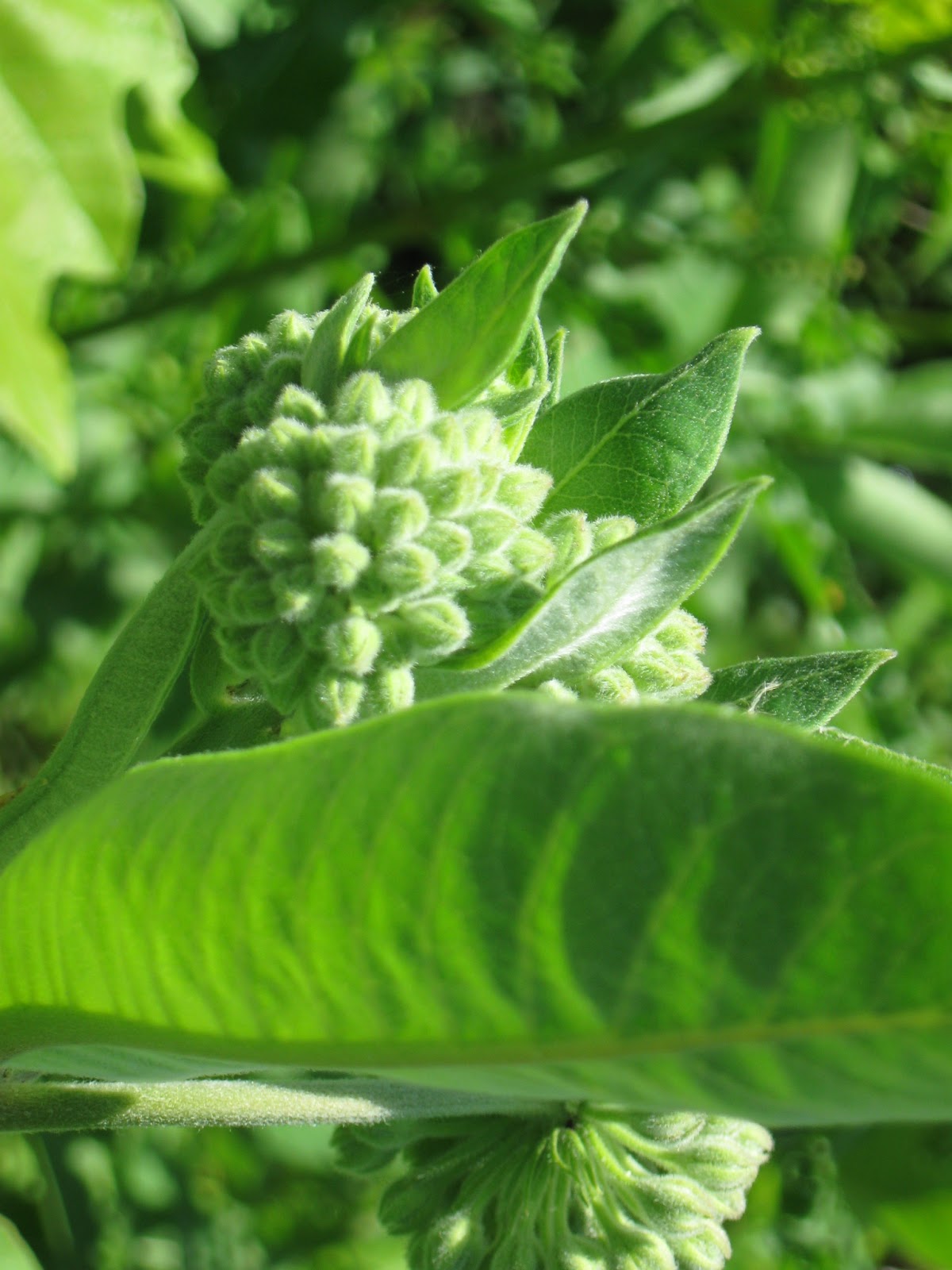
And there are some places here I do find important native plants on my neighborhood walks, including Common Milkweed poking up beside an old stone wall each spring, and the clusters of litter white asters that I can count on each autumn. Seeing them does give me a little hope that these organisms can hang on, despite human neglect or interference, and if we give them and their kin a boost by encouraging people to plant natives and use organic methods, maybe we can not only restore some of the more crucial components of our native plant communities, but prevent the next wave of invasive plants from gaining a foothold in our environments.

Copyright Daniel E. Levenson 2022


Friday, June 3, 2022

Welcoming Beneficial Wasps Into the Garden


A Blue Mud Dauber among the Milkweed. Photo Copyright Daniel E. Levenson 2022.


June 3, 2022

One of the more delightful things about creating pollinator gardens, and generally replacing lawn grass or alien ornamental plants with native plants is that it’s not only butterflies and hummingbirds that show up, but a really interesting range of other types of pollinators which are perhaps less commonly noted by the casual gardener. As I’ve built up the native plant and pollinator gardens around my yard these last three years I’ve been endlessly fascinated not only with the  perhaps expected Ruby-Throated Hummingbirds that stop by on their daily rounds, or the Monarchs on the Milkweed, but by the range of other kinds of pollinators which are drawn to this little patch of native plants.

One of the first visitors I began to notice last summer once the Milkweed and Bee Balm was in bloom were two species of solitary wasps: Blue Mud Dauber (Chalybion californium) and Golden Digger Wasps (Sphex ichneumonea), both of which seem to be well-established in and around the back garden. These two species are generally not aggressive towards humans, but if you’re grasshopper in the case of the latter, or another species of mud dauber in the case of the former, it would be prudent to exercise caution: The Golden Digger Wasp hunts, paralyzes, and provides grasshoppers as food for their offspring inside a sealed tunnel, and the Blue Mud Dauber is known for finding its way into the nests of other species of Mud Dauber where, not unlike our local Brown-Headed Cowbirds with respect to other songbirds, it then removes the eggs of its near relative and leaves behind its own, using parasitism as a strategy for survival. Although I’ve yet to see these two creatures in the garden this year, my guess is it’s still a bit early, and as the Common and Swamp Milkweed in the garden move closer to flowering, these species of beneficial insects will once again be buzzing around the flowers.

Copyright Daniel E. Levenson 2022.

Wednesday, June 1, 2022

Woodrow Dines on The Deck


Our resident Woodchuck decided to try something new this evening, snacking on some potted violets on our back deck.

June 1, 2022

Some of the animals that show up in our yard are undoubtedly passing through, on their way to or from some other woodsy place in town. The doe and her fawns, the rowdy group of male Wild Turkeys, the coyotes we hear at night - they wander through on their way to somewhere else and we are content to see them as they appear. With others, though, we clearly share this little patch of suburban forest, and the dean of the hyper-local inhabitants is undoubtedly our resident Woodchuck, whom we have named Woodrow. Our first summer here Woodrow made regular appearances in the backyard during the day, munching on grass and other greens, waddling cautiously from one place to another in his little fiefdom, and then the second summer he was conspicuously absent. This spring Woodrow has appeared again with some regularity, and this evening he surprised us by climbing the few steps beside the back pollinator garden onto our deck, where he dined on some potted violets. It was hard to tell if he found them very palatable, for a minute or two into his meal he stood up, turned, and galloped, in a fashion, back toward his burrow beneath the shed.

Many people who covet picture perfect lawns curse the Woodchuck, and I admit, should Woodrow turn his attention to excavation close to the house I may need to have a serious conversation with him, but as a fellow inhabitant of this land, I enjoy watching him as he goes about his daily business, ambling through the grass in search of tasty things to eat.

Copyright Daniel E. Levenson 2022


Tuesday, May 31, 2022

Rewilding Suburbia - Part 1

May 31, 2022


In order to help make our yard more attractive to wildlife and give the landscape a more natural feel we've been adding not only smaller flowering plants, but native trees and shrubs as well, including this Silky Dogwood shrub (cornus amomum). This plant arrived in bare root form from Prairie Moon Farms and went into the ground last autumn. In order to give it plenty of room to spread out I cut back a rhododendron that was running wild across an old flower bed. When fully mature, this shrub should reach 6'-10' feet in height. Photo Copyright Daniel E. Levenson 2022.

It’s been quite some time since I last posted anything on this blog, and to be honest, many other writing projects have come and gone in the intervening period, and the efforts I put into this nature blog had faded from memory. In fact, I think I pretty much forgot it existed.

And then we were hit by a global pandemic in early 2020, and to escape the depressing claustrophobia of life largely confined to home I turned my attention to writing about the natural world once again, turning early morning forays to little ponds and suburban parks into short essays I collected in a manuscript. That manuscript still sits on a hard drive, because when I went back to read it and edit it, I found it rather depressing. Then I started to write something else, but that petered out as well. Such is the act of writing I suppose. As any honest writer will relate, their files - be they physical, digital, or mental - contain far more half-finished pieces and scraps of ideas than ever see publication.

Part of what drove the first year pandemic nature essay project was a desire to give myself the (admittedly delusional) goal of creating a sense of control in a world that felt like it was fraying at the edges. In terms of structure, this effort was designed to reflect not only the similarities and differences I saw in the landscape between and among the seasons, but to try and capture the edges where they overlap - seasonal ecotones one might call them, I suppose.

For now, that work sits on a shelf. I may return to it one day, or I may let it remain as it is, a raw account of a year spent seeking solace in the forests and meadows close to home.

In the meantime one of the most exciting ongoing projects I’ve embarked upon has been a small-scale rewinding effort in the yard around my home. In broad strokes, this effort has been comprised of several key elements:

  1. Removing alien-invasive plants
  2. Plating species of plants native to the eastern US and specifically New England, including various Milkweeds, Asters, Lupine and others, and allowing native plants to fill in open spaces on their own
  3. Using organic gardening techniques to encourage the growth of native plants to improve the soil,  and avoiding the use of gas-powered mowers, blowers, etc.
  4. Adding brush piles, bird feeders, bird baths, and allowing snags to stand (when and where safe)

The removal of alien-invasive plants is admittedly a frustrating aspect of this work, because, as the name implies, these plants have not evolved along with our native plant communities or in concert with out local wildlife or other conditions, and so they wreak havoc on the inner workings of local habitats. Many of these plants seem to thrive in their new homes, as they hav practically no natural controls to keep them in check. 

While this yellow bloom may look nice - and undoubtedly it adds a nice pop of color in its native land, this Creeping Buttercup (Rananculus repens) has ranged beyond its historical borders and spread aggressively as an invasive plant in the United States. Photo Copyright Daniel E. Levenson 2022.

Unlike some of the naturalized plants which remain reasonably in place and at least have the decency to provide shelter for birds and bugs, these alien invasive have few redeeming qualities in comparison. Whether artifacts of ornamental imports or stowaways from the dawn of global shipping, the Japanese Knotweed, Oriental Bittersweet and Garlic Mustard I regularly try to eradicate often defy my best efforts. In fact, part of me wonders, as I remove patches of grass and hack away at the rhodedendrons to make more room for the Silky Dogwood that entered the earth as a bare root plant last fall, whether I’m disturbing the soil and inviting in the poison ivy (native, but not near the house, thank you very much) and its more noxious compatriots into new parts of the yard.

Nonetheless, I shall continue to pull them up.

The more time I spend on this aspect of rewinding the more I realize how little all of us - myself included - often know about our native plant communities, and frankly lack the ability to really understand the roles that different plants play. Such ignorance often leads to all sorts of wrong-headed thinking.

The concept of “weeds” is a good example - what we might think of as “weeds” are often in fact native plants which may have lacked agricultural value or appeared “untidy” to the modern gardener.  Ironically, many people are quick to mow down (literally and figuratively) the native plants that will help to improve their soil and the overall quality of their immediate natural environment, believing that they are making their yard “better.” Then, in place of these plants which have evolved over millennia to thrive in concert with their fellow native flora and fauna, many people are quick to lay down hyper-thirsty grasses which are ill-suited to our suburban lawns. To the ignorant eye these acres of yard may look nice, but in reality they are often utterly devoid of life, true wastelands.

On a positive note, however, I have found that when I’ve made space for these native plants they often find their way back, springing up where undoubtedly their ancestors once stood tall in the sun. Human intervention is admittedly helpful in order to have these returning plants thrive. I’ve spent my share of time clipping bindweed that’s wrapped itself around the Bee Balm, or pulling up cinquefoil that’s edging its way a bit too close for comfort around the Swamp Milkweed in the back pollinator garden.  One of my favorite plants that popped up during the first summer was American Pokewood, a thick green stock with lovely purple berries that is toxic for mammals but a critical  food source for migrating birds in the fall. Along the edge of the house wild raspberries have also lifted themselves up from the soil, and I’m hopeful that even if we don’t get to enjoy the fruit, the local wildlife will.

This is of course part of the thrill of this endeavor, first we see what native plants might return on their own or thrive when planted in the right spot, sunny or shady, damp or dry, according to their preference. And once the plants begin to thrive the pollinators take notice, drawing in the butterflies, moths, flies and hummingbirds which bring life back into this space that was once a patch of grass.

Copyright Daniel E. Levenson 2022.


Friday, December 26, 2014

Late December at Chestnut Hill Reservoir

With unusually warm weather in New England this late fall and early winter, some of my go to places for ducks have not been as productive as usual. I'm guessing this has to do with an abundance of open water this year, while over the last few years most lakes and ponds have been frozen in December, thus helping to concentrate the birds in the few places that are not iced over. In any event, yesterday the temperature was hovering around an unseasonably balmy 60 degrees, so I headed to one place where I've always had pretty good luck, regardless of the weather: Chestnut Hill Reservoir in Boston, MA.

Although I don't go birding there perhaps as often as I should, I do find that whenever I make the time to walk around the reservoir I'm usually rewarded with lots of ducks and this time was no exception. As soon as I approached the parking area I could see several groups of different size ducks floating on the water, so I had a good sense that I would put together a reasonably diverse list. For whatever reason the reservoir was extremely low, exposing lots of rock formations which I had never seen before. Some of the birds took advantage of these newly exposed perches, including a solitary Great Blue Heron standing tall among a group of Canada Geese out toward the middle of the water.

While there were probably in excess of 150 Canada Geese in the area, the most abundant duck of the day were the Ruddy Ducks - I counted approximately 100 of these small diving ducks and I'm guessing there were likely more. They were clumped up in several rafts around the edge of the reservoir, sometimes mixing in with the Mallards and the occasional Hooded Merganser. During my walk I also ran into two other birders who were kind enough to alert me to the presence of an (American) Green-winged Teal and a male Northern Pintail. The teal was hanging out with a few Mallards in a little corner, and it was neat to see these two species side by side and observe the noticeable size difference between the two up close. The Northern Pintail was especially exciting to see - it was very close to the shore (maybe 15 feet away from me) and in gorgeous, bright plumage. While I've seen pintails before on Plum Island, I had never gotten this close to one.

All in all I spent an hour walking around the Chestnut Hill Reservoir, enjoying the strange weather and seeing some beautiful birds. Not a bad way to spend a December afternoon.

My complete list for this outing:

Blue Jay
Mourning Dove
Canada Goose
Hooded Merganser
Ruddy Duck
Mallard
Common Merganser
Green-winged Teal (American)
Great Blue Heron
Northern Pintail
Gull Sp.

Copyright Daniel E. Levenson 2014.


Sunday, May 4, 2014

Yellow Warblers arrive at Nahanton Park


It's wonderful to be able to look out the window and see bare branches filling in with bright green leaves - not only does it do much to lift my spirits after a very long, cold winter, but it also means that more and more migratory birds should be showing up in the wetlands, forests and rivers. This past week I had a chance to get over to one of my favorite places in Newton to go birding, Nahanton Park. This is a great birding spot because it has a nice mix of open meadow, forest and community gardens which attract a range of birds, from warblers to grosbeaks to swallows. it's a nice place to visit year-round, but I especially love it in the spring when the air is full of birdsong.


Two male Downy Woodpeckers inspect a tree trunk at Nahanton Park in Newton, MA. Image copyright Daniel E. Levenson 2014.

Wandering through the lower gardens I was surrounded by the singing of male Yellow Warblers. these small, bright yellow warblers with crimson streaked-chests have a distinctive appearance and song, and are often found in brushy, wet habitat. There was also a gray catbird singing from a hidden perch in some low trees and shrubs, letting loose it's incredibly varied, complicated song. While the Yellow Warblers were the only warblers I encountered there, this is usually a pretty good spot for other warblers, including Black and White. Now that spring is finally here I'm looking forward to more birding at Nahanton Park and adding new species to my list for this location.

Thanks for reading.

Copyright Daniel E. Levenson 2014.


Friday, April 25, 2014

Birding Florida, part 2


A Tricolored Heron wades in the shallows at Wakodahatchee Wetlands in Palm Beach County, Florida. Image Copyright Daniel E. Levenson 2014.

One of the most beautiful and productive spots I've ever been birding has to be the Wakodahatchee Wetlands, a gorgeous and easily accessible park with a long, winding boardwalk that takes visitors over and through a remarkable mix of marsh, pond and edge habitat filled with a wide range of avian and reptilian life. We were very lucky to get there on a bright, beautiful morning, before the park got too crowded and I was struck right away by the abundance of birds everywhere, from Tricolored Herons to Common Gallinule and Anhinga.


The boardwalk at Wakodahatchee Wetlands offers prime viewing of an amazing range of birds and other wildlife, including alligators. Image copyright Daniel E. Levenson 2014.

I was particularly excited to see the Tricolored Herons, a new life bird and one that I was able to see up close from the boardwalk. The air above the boardwalk was alive with the flapping wings and awkward flight of Anhinga moving from one tree to another, and in the vegetation there were plenty of Little Blue Hersons, Green Herons and Blac-Crowned Night Herons on the lookout for their aquatic prey. We were also lucky enough to get a really good look at a pair of Blue-Winged Teal, a bird I had only previously observed at a distance.

An Anhinga in a tree gathers vegetation, presumably for a nest. Image copyright Daniel E. Levenson 2014.
Overall this was one of the best places I have ever been birding and would highly recommend it to both beginning and advanced birders -  the opportunity to see a range of wading species, ducks and other birds up close which are normally difficult to spot is not only a lot of fun, but also affords the chance to sharpen ID skills and observe a range of behaviors, from feeding to nesting. I know I can't wait to get back.

Copyright Daniel E. Levenson 2014.

Unexpected Owls

Now that the snow is gone, the ice has melted and the trees are once again bursting forth with buds, leaves and birds, I find myself itching to get back out into the woods and onto the water. Just this past week I spent some time birding at Moose Hill Wildlife Sanctuary in Sharon, MA, where I was delighted to see early returning migrants, including metallic-blue Tree Swallows hunting in swooping arcs over meadows, their liquid chirps filling the air. The Eastern Phoebes were also around, perched conspicuously on still-bare branches at the edge of a field, tails bobbing.

Along the boardwalk the skunk cabbage was starting to emerge from its long slumber beneath the frozen mud and as I walked along I suddenly heard, very distinctly, the sound of a Barred Owl calling in the distance to my left. I paused, listened again, and there it was  - repeating - at first I thought perhaps someone was playing a recording of a Barred Owl, but then I heard another one calling from the other side of the boardwalk. I have heard these birds many times at night, and their distinctive "Who cooks, who cooks for you ?" call is one of the easiest for me to remember. Beginning birders are often told that if they hear hooting or cooing during the day, its most likely a dove or pigeon, but this was definitely two Barred Owls making their presence known, in broad daylight.

After a little research I learned that it is actually not uncommon for these highly territorial, non-migratory birds to call during the day. I was positively delighted to learn this new fact about Barred Owl behavior, something I wouldn't have known if I hadn't had the strange experience of standing on a boardwalk in a wetland in the middle of the day and been taken by surprise by the calls of a bird I know well in another context. This is what I love about birding and outdoor exportation in general - there is always something new to discover and explore, and one never knows when one of these moments will occur.

Thanks for reading.

Copyright Daniel E. Levenson 2014.

Friday, February 7, 2014

South Florida, Part 1 : Alligators, Palm Trees and Purple Gallinule.


A White Ibis searches for food at the edge of a parking lot in Boca Raton, Florida. Image copyright Daniel E. Levenson 2014.
After trudging around in the cold and snow all winter, it was nice to get away for a few days and explore south Florida. This was a great trip, from a birding perspective, because I not only managed to pick up a number of new life birds but also had a chance to see a number of species, such as Red-winged Blackbirds and Osprey, which I'm unlikely to see in New England for another couple of months.Over the 5 days I spent in Florida I had the opportunity to see some amazing wildlife, starting off with a trip to the Gumbo Limbo Nature Center, where we had the opportunity to see a variety of sea turtle species up close, learn about the important conservation work going on at the center and check out some very cool spiders spinning enormous, elaborate webs, along the boardwalk.

A Green Sea Turtle swims in a large tank at the Gumbo Limbo Nature Center in Boca Raton Florida. This particular turtle was badly injured by a motor boat and was sent to the nature center for medical care. Image copyright Daniel E. Levenson 2014.

A Crab Spider sits patiently on its web along the boardwalk at Gumbo Limbo Nature Center. Image copyright Daniel E. Levenson 2014.
Although we didn't see any birds as we walked along the boardwalk, we did hear a few calling from within the thick tangle of trees that surrounded the path.  There were also several Crab Spiders, such as the one in the photo above - truly intriguing creatures which at first glance really do resemble crabs. There was also a beautiful butterfly garden to explore and a nice variety of plant life to enjoy, from the Gumbo Limbo trees to Mangroves.

A lizard at the4 Gumbo Limbo Nature Center. Image copyright Daniel E. Levenson 2014.
An Atala butterfly perches on a plant in the butterfly garden at Gumbo Limbo Nature Center. Image copyright Daniel E. Levenson 2014.
One of the most interesting animals we saw during our visit to Gumbo Limbo was an Atala butterfly (shown in the photo above). This butterfly was in serious trouble during the 1970's as the the species of plant they rely on for food was declining. Fortuately, through the dedicated work of conservationists, this butterfly has made something of a comeback in south Florida, the only place in the US where it can be seen in the wild.


The Florida Everglades are an amazing place to observe all kinds of wildlife, from Purple Gallinule to American Alligators. Image copyright Daniel E. Levenson 2014.
As we drove around this part of Florida we continually saw  a variety of birds along the sides of the highways, in little pockets of wetland and small ponds and in virtually every parking lot, including Cattle Egret, Double-Crested Cormorant, White Ibis and Common Gallinule. The skies overhead were also filled with vultures and practially everywhere we went there were large groups of Boat-tailed Grackles.

The next day we got a taste of the Florida Everglades on a air boat tour from the Everglades Holiday Park in Fort Lauderdale. Before embarking on our tour we had some time to watch the many Boat-tailed Grackles around the parking lot and the Turkey Vultures wheeling in the sky overhead.

A Boat-tailed Grackle perches on a railing outside the store at the Everglades Holiday Oark in Fort Lauderdale, Florida. Image copyright Daniel E. levenson 2014. 


A Black Vulture sits close to the water's edge in the Everglades. Image copyright Daniel E. Levenson 2014.
This year I am trying to focus on improving my field ID skills, so it was great to have the chance to get a really good look at a group of Black Vultures in a tree and along the shore during our boat ride. I've had the opportunity in the past to get close to Turkey Vultures, but these Black Vultures were a new life bird for me and I was very happy to be able to see how different they really are from Turkey Vultures. I also had the chance to observe them in flight a few other times, often sharing a patch of sky with Turkey Vultures, which afforded me the opportunity to compare the differences in flight style, shape  and coloration, essentially side-by-side. Next to the Turkey Vultures the more compact tale and wing pattern of the Black Vultures were easy to see.

A Purple Gallinule comes out of the vegetation along the water in the Everglades. These colorful birds feed on insects they find in and around aquatic vegetation. Image copyright Daniel E. Levenson 2014.


In the next part of this two-part post I will share observations and photos from  an outing to the Wakodahatchee Wetlands, where we had amazing, up-close views of an incredible variety of bird life, not to mention several American Alligators and a feral Iguana. Be sure to check back soon for part two of my Florida birding experience.

Copyright Daniel E. Levenson 2014.


Tuesday, December 31, 2013

Looking back on 2013: 200 species of birds, from New England to Israel


Redheads in the Chestnut Hill Reservoir in Boston, MA on New Year's Day, 2013. These were not only a new life bird for me, but an exciting find on a frigid winter day and a great way to start off my attempt at a 2013 big year. Image copyright Daniel E. Levenson 2013.
 
As 2013 draws to a close I've been thinking a lot about the birding I've done over the past year, as I attempted to do my own version of "big year." I started out with the goal of seeing 300 species in Massachusetts, then shifted my geographic range to all of New England, since I knew I would be spending some time in Maine, New Hampshire, Rhode Island and Connecticut as well. In the end I saw a total of 200 species for year, the vast majority in New England, but a good number in Israel as well. My final stats for the year were as follows:

Total species seen in New England: 179

Total species seen in Israel : 23 

Total species seen (or heard) for the year: 200

New life birds added for North America: 57 (I also managed to begin my year with a new life bird on New Year's day with a group of Redhead ducks and end the year with another new bird, a Snowy Owl seen in Rhode Island)

One of the best things about this project was that it gave me a chance to meet some really great people in the birding community, see new places and learn more about bird life and general ecology. I spent many winter hours walking along the edges of semi-frozen ponds, sweltering days fighting mosquitoes and dehydration in forests and wetlands and had a tremendous amount of fun doing it all.

At the Jerusalem Botanical Garden in Israel I cam across this Little Egret (a fairly common Eurasian bird closely resembling Snowy Egret) which  was a nice addition to both my 2013 year list and my life list.  Image copyright Daniel E.Levenson.
There were many great experiences and moments, but I think one of the best was defintiely participating in the Mass Audubon Bird-a-Thon as part of the Drumlin Farm Wildlife Sanctuary team - with Strickland Wheelock as our expert coach we spent 24 hours scouring the outer cape where there were Whip-poor-wills to be heard calling in an old graveyard, Northern harriers hunting over dunes, a large breeding colony of Double-Crested Cormorants to be seen at the entrance of Provincetown harbor and a spectacular sunrise to watch at Pilgrim Heights. We also had very good luck when it comes to the numbers and diversity of warblers to be found. This was a fantastic birding experience and one I am looking forward to doing again this year.

During my 2013 New England big year I had a chance to visit many beautiful beaches and coastal areas, from Rhode Island to Maine. Image copyright Daniel E. Levenson 2013.
In 2014 I plan to slow things down and focus much more on field observation and trying to sharpen my bird ID skills. Instead of checking e-bird reports constantly (a habit I alternately embraced and rejected several times throughout the course of this past year) I plan to focus on just getting outside wherever and whenever I can, with my binoculars and a notebook.  My goal is to keep detailed lists not only of the birds I see, but to gather as much data as I can, including notes on weather, bird behavior and breeding activity. Another thing I would like to do is make notes on field marks to help sharpen my ID skills, especially when it comes to sparrows, gulls, flycatchers and warblers. Wherever I go birding in the coming year this is going to be my approach - so I'll see where I end up birding and exploring, and of course I plan to share what I find, here on this blog.

So here's to a year of slow birding in 2014, and thanks for reading.

Copyright Daniel E. Levenson 2013.


Friday, December 13, 2013

December birding in Rhode Island brings my list to 200 species for the year


A group of birders scans the waves for Surf Scoters, harlequin Ducks and other visitors to the Rhode Island coast in winter. Image copyright Daniel E. Levenson 2013.
Back in January I began a quest to complete my own version a birding big year, with a focus on Massachusetts. My original goal was to find 300 species of birds in Massachusetts, but over the course of 2013 my focus shifted a little, first to include all of New England. This was a really great project and I feel like it taught me a lot about bird ID, where to find birds, and gave me a glimpse into larger patterns of migration and the ways that birds interact with their environment. Although there are still two weeks left in the year and I may add another species or two to the list if I'm lucky, I have to say I'm pretty happy to have seen 179 species in New England, and another 21 species in Israel, for a total count of 200 species for the year.


During a recent outing to Rhode Island with Mass Audubon's Drumlin Farm Wildlife Sanctuary, I added the most recent 5 species which brought my year list to 200, all of which also happened to be life birds, which was really exciting. During this outing I added a Purple Sandpiper feeding in the surf along a rocky outcropping, a Ruddy Turnstone along the beach, a beautfiul Snowy Owl perched atop a huge beach-side rock, a White-crowned Sparrow feeding in brush along a trail and several Black Scoters just off of the beaches near Newport. In the next two weeks I'm looking forward to getting out a little more, but for now I have to say I'm pretty happy to have reached 200 species for the year.

I'm looking forward to getting outdoors as often as I can in 2014, and hopefully exploring some new areas in New England other parts of the country.

Thanks for reading.

Copyright Daniel E. Levenson 2013.

Friday, December 6, 2013

November birding in Israel


A large pond in the Jerusalem Botanical Gardens offers birders an excellent place to watch for Little Egret and at least two species of Kingfisher. Image copyright Daniel E. Levenson 2013.

Last month I had a chance to do a little birding in Jerusalem, a place which is not only rich with thousands of years of history and culture, but  a wonderful place to go see an incredible range of species passing through on their way to and from Europe, Africa, Asia, the Mediterranean and other parts of the Middle East. Over the course of a few days I visited the Jerusalem Bird Observatory, the Wohl Rose Garden and the Jerusalem Botanical Gardens, where I saw many interesting birds.

A Eurasian Jay searches for food along the edge of a stream at the Jerusalem Bird Observatory in Israel. Image copyright Daniel E. Levenson 2013.
At the Jerusalem Bird Observatory I spent several hours inside the hide watching Eurasian Jays, European Robins, White-spectacled Bulbuls, Palestine Sunbirds, Laughing Doves and other birds that I got to know fairly well when I lived in Jerusalem in 2009. I also had a chance to speak with some staff and volunteers at the observatory who were doing a bird banding demonstration, and were nice enough to let me know which birds watch out for in the area this time of year.While I saw many great birds at the observatory and in the Wohl Rose Garden across the street I have to admit I was slightly disappointed that I did not see a Bluethroat, a particularly striking bird that I have wanted to add to my life list for some time now. One surprising find were two House Crows, a species not native to Israel and more commonly found in India, but which has established a presence in the country.

Hooded Crows like the ones in the photo above are a common sight throughout the city of Jerusalem and can often be seen perched in trees and foraging for food in city parks. Image copyright Daniel E. Levenson 2013.

I particularly enjoyed birding in the botanical gardens, with its winding paths that take visitors on a botanical tour of the world. It was here that I added 4 new species to my life list: Grey Wagtail, Little Egret, Sardinian Warbler and White-throated Kingfisher. I also had a lot of fun trying to get close to and photograph some of the lizards that were enjoying the late Autumn sunshine, basking on the rock walls that line the walking trails.
At the Jerusalem Botanical garden a  Little Egret stalks along a partially submerged cable, hunting for food. Image copyright Daniel E. Levenson 2013.

In total I added 23 species to my year list, and 10 to my life list, which was not bad considering I had limited time to go birding. I'm looking forward to returning soon and getting out into other parts of the country to look for dessert species in the south and hopefully to visit the Hula Valley, one of the best spots for birding on the planet.

Thanks for reading.

Copyright Daniel E. Levenson 2013.

Saturday, October 5, 2013

A Spotted Sandpiper along the Charles River is Bird #174 for the Year


Fall colors were on display along the Charles River in Newton and Waltham. Image copyright Daniel E. Levenson 2013.
 
Over the past week I've managed to get out and do a little more birding by kayak on Lake Cohituate in Natick and the on the Charles River in Newton. Both times I've brought my camera along and on each outing I've been able to get quite close to a number of very striking birds, including a Black-Crowned Night Heron (found perched in the same place I saw one mentioned in my last post), several brightly-colored male Wood Ducks, an Osprey and  a Spotted Sandpiper.

A Painted Turtle sits on a half-submerged log on Lake Cochituate in Natick, enjoying the last few rays of summer sunshine. Image copyright Daniel E. Levenson 2013.
Paddling around Lake Cochituate I saw fewer birds than my previous trip, but there was still plenty to see, including the Painted Turtle in the photo above. There was also a raucous chorus of Blue Jays in the trees and many Mallards out on the water. The absence of the sound of Gray Catbirds was also noteworthy - perhaps they've already begun their migration.

A Spotted Sandpiper hunts for food along the muddy banks of the Charles River in Waltham, Massachusetts. Image copyright Daniel E. Levenson 2013.
While paddling on the Charles River this past week I added a Spotted Sandpiper to my year list, bringing my total to 174 species. At this point it would be practically impossible to get my New England big year list up to 300 species, but I am hoping to hit at least 200 species for the year in New England, which should be an attainable goal if I get out this fall and early winter in search of Finches, Snowy Owls, etc. With one trip abroad planned before December 31 I's hoping to hit at least 210 for my personal year total. Either way it's been a fun project and down the road I would defintiely consider attempting another "big year," most likely within tighter parameters - i.e., only in Massachusetts or only for a month.


A Great Blue Heron sits perched on some branches along the Charles River in Newton, MA. Image copyright Daniel E. Levenson 2013.
I have to admit that as much as I've enjoyed being able to be out in the woods without wearing many layers of clothing that birding in the warm weather can be just as challenging as birding when it's cold outside. This is one of the wonderful things about New England - last March when I had taken just about all I could handle of blizzards, ice and freezing winds I was ready for warm nights, sunshine and a steady stream of Warblers and now that I've endured a summer full of biting insects, sunburn and dehydration I'm more than ready to throw on an extra layer or two and head out to look for wintering sea ducks, Snowy Owls and Finches. I suppose that just like the birds themselves that birders have seasonal patterns too.


Thanks for reading.

Copyright Daniel E. Levenson 2013.

Saturday, September 28, 2013

Fall Birding by Kayak Brings My Year List to 173 Species


A kayak is a wonderful tool for birding and photography, allowing birders to move quietly along wetlands, ponds and rivers without disturbing wildlife. Image copyright Daniel E. Levenson 2013.
It's been a busy summer, and while I have managed to get outdoors a decent amount, I've had practically no time to update this blog. Suffice it to say I added no new species in July or August, but recently I managed to get out on the Charles River in a kayak for a couple of hours and was delighted to not only add a Black-Crowned Night Heron to my year list, but to see many other species of birds as well, including many Wood Ducks, at least 5 Great Blue Herons, two rather noise Belted Kingfishers chattering loudly as they swooped down to grab small fish and then return again briefly to the dead branch of a tree stick up out of the water.

I heard many racuous American Crows and Blue Jays calling so I kept alert for signs of raptors-  I did see one hawk circling high overhead, likely a Red-tailed Hawk, but too far off for me to definitively ID without binoculars. The best find of the day, however, was definitely the Black-crowned Night Heron, a normally quite secretive species that I found perched at the edge of the river on the branches of a half-submerged tree. The heron was not skittish at all and as I drifted past I was able to get a photo with my phone before it took off.

A Black-crowned Night Heron perches in a branch sticking up out of the Charles River in Newton, Massdachusetts. Image Copyright Daniel E. Levebnson 2013

 I spent the rest of my time paddling into hidden pockets and back behind the edges of lilly pad fields, in search of more ducks and wading birds. It was nice to gert back out not only on the water but to do a little more serious birding than I've had the time to attempt this past sumnmer. Hopefully this Fall will bring more birding adventure, which I will of course write about here.

Thanks for reading.

Copyright Danniel E. Levenson 2013.

Sunday, July 21, 2013

An abundance of birds, despite the heat


A male Northern Cardinal pauses on a branch to survey the shrubbery around it. Image copyright Daniel E. Levenson 2013.

With seemingly endless heat and humidity battering New England for the last few weeks I haven't spent too much time out in the field exploring and birding. Today, however,I managed to get out to Broadmoor Wildlife Sanctuary in Natick, Massachusetts where with a little effort I managed to find a number of species which seemed undaunted by the intense summer weather. When the temperature rises many animals will minimize activity and seek out ways to keep themselves cool, and humans are no exception, so today I made sure to drink plenty of water, wore a hat, sunglasses and sunscreen, and focused on moving more slowly. I focused on taking the time to examine promising little pockets of habitat where I though birds might be have gone to seek shade or look for food at this time of year. Although many birders prefer to look for shorebirds (or engage in other activities altogether) during the hottest part of the year, this is actually a great time for the birds themselves. Between the cover provided by thickening vegetation and the abundant supply of bugs, berries and seeds, the middle of summer is proabbly a pretty good time to be a songbird.


By mid-July fields and meadows throughout New England are often covered in thick vegetation, providing ideal habitat for a wide range of insects and bird species. Image copyright Daniel E. Levenson 2013.
This afternoon I was lucky enough to stumble upon one really nice spot right at the intersection of the forest and meadow where I stopped to listed to a pair of Northern Cardinal calling and soon added ten more species my list for the day, including two Gray Catbirds which were quite loud and whiny as they attempted repeatedly to land in a tree the cardinals seemed to have claimed as their own. The tree in question was covered with berries, and as the cardinals chased off the interloping catbirds I watched as a Song Sparrow pulled a berry loose from a branch and attempted to eat it - unfortunately for this hapless bird the berry proved to be too big for its bill and the berry dropped from its grip and disappeared into the tall grass below. While standing in this same spot a Blue-Gray Gnatcather also showed up, moving frenetically from the very tip of one branch to another, searching for tiny insects, and a female Common Yellowthroat also arrived, hanging around long enough for me to get a really good look at the a species where the male is much more striking and easily recognized.

I finished up by exploring another meadow where the plants and grasses had shot up to head level, providing convenient cover as I scanned the open areas above the field, looking for additional birds. After a while the humidity and Deer Flies began to take their toll and I headed home, already thinking of fall migration and cooler days but eager not to let the hidden pleasures and surprises of summer birding slip away just yet.

Thanks for reading.

Copyright Daniel E. Levenson 2013.


Thursday, June 27, 2013

Birding Pawtuckaway State Park in Nottingham, New Hampshire


A Cedar Waxwing perches on an exposed branch at the top of a steep hill in Pawtuckaway State Park in Nottingham, New Hampshire. Image copyright Daniel E. Levenson 2013.
During a recent birding day trip to Pawtuckaway State Park and the surrounding area with a group from Mass Audubon's Drumlin Farm wildlife sanctuary I couldn't help thinking back to those chilly days in January and February when I slogged through frozen wetlands, waded through snow drifts and scanned the freezing surf for scoters and other ducks. Where once there was windburn, ice and frozen sand we now had humidity, mosquitoes and the looming possibility of pop-up thunderstorms to consider.
Fortunately, though, we got an occasional breeze and the presence of so many exciting birds definitely helped to take my mind off the occasional dark cloud overhead.

We started out by visiting a lovely wetland area along a side road somewhere south of Pawtuckaway State Park, where we scanned the thick green vegetation and surrounding forest. On one side of the road there was a large, shallow pond, brimming with weeds. Here we saw a female Wood Duck in the distance, moving slowly and almost indisit6nguishiable amidst the tangle of Lilly pads around her, a White-tailed Deer wading against the far shore and in the trees on the opposite bank Great-crested Fly Catchers, a Scarlet Tanager and a pair of Red-bellied Woodpeckers which swooped in overhead, landing in a tall tree by the edge of the road. Although the wetlands looked like prime terrirotry for Virginia Rail we didn't see any there, although I suspect that there must have been one or two tucked away deep in the vegetation, staying safely out of sight.

In early summer wetlands like the one above in southern New Hampshire are excellent spots to look for rails and other marsh birds. Image copyright Daniel E. Levenson 2013.
It was also at this location where I added two more species to my year list - an Eastern Wood Peewee and the Scarlet Tanager. Throughout the day we heard and saw a number of peewee's, which was great since I have been working on improving my birding by ear skills, which are somewhere between non-existent and pretty bad at this stage. Nonetheless, the peewee and a few other thoughtful birds became my teachers for the day, and with the expert guidance of our trip leader, Strickland Wheelock, I actually managed to learn to identify at least 3 more species by ear, which was really nice. This is definitely one of the major advantages of the Mass Audubon birding trips, that you not only get to see a lot of birds but you can always learn something new as well.

Our next stop was a power line cut near the state park where I added three more species to my year list: Field Sparrow, Indigo Bunting and Prairie Warbler. I have written here before that in my opinion the Bobolink has the coolest songs in the avian world, but after listening to the Prairie Warbler I may have to rethink that assertion. If you've never heard it I highly recommend taking a listen to its call and song. We heard several of these talented singers as we hiked a little way down the power line road,where we were also treated to great views of a swirling kettle of Turkey Vultures and a lone Broad-winged Hawk.


This fire tower sits atop a hill at Pawtuckaway State Park in Nottingham, New Hampshire and is surrounded by a variety of bird feeders. Image copyright Daniel E. Levenson 2013.
We spent the rest of the day exploring the state park, driving along the narrow dirt roads with the windows down and stopping to look for birds as we went. Using this technique we found a number of very productive places, including a beaver pond and wetland where a Virginia Rail came within a few feet of our group, as well as several American Redstart, two Louisiana Waterthrush and a forested areas that produced both Blue-headed Vireo and Yellow-throated Vireo, two very striking birds and a lot of fun to watch as they moved quickly through the canopy overhead. We also hiked up to the top of a steep hill where we ate lunch and watched numerous Purple Finches and Ruby-throated Hummingbirds visit a multitude of feeders that surrounded a fire tower. It was in this spot that I also saw my first Common Raven of the year. By the end of the day I had added 11 more species to my New England birding big year list, bringing the total to date to 172 species seen. This was my first serious birding effort in the Granite State, and with so many beaver ponds, wetlands, forests and mountains to explore up there I'm looking forward to doing more.

Thanks for reading.

Copyright Daniel E. Levenson 2013.
 

Saturday, June 15, 2013

A look at some of the birds and blooms of Harpswell, Maine


A whirling wooden loon sits on a railing at a gift shop at Land's End in Harpswell, Maine. Image copyright Daniel E. Levenson 2013.
I recently spent a little time birding along the beaches and craggy coves of southern Maine, in and around the Harpswell area. While I didn't add any new species to my year list (or see a moose) I did enjoy looking out at the waters of Casco Bay, watching male and female Common Ediers resting in the surf and on small islands, and generally exploring the winding roads of Cumberland County.


A Song Sparrow sings with the ocean in the background. Image copyright Daniel E. Levenson 2013.

We started off with a windy, slightly rainy morning of casual birding at Land's End, a gorgeous spot at the very tip of Bailey Island in the town of Harpswell. Here we walked along a short section of rocky beach looking out at the gently rolling waves and rocky little islands in the distance while we listened to the serenade of Song Sparrows perched prominently atop shrubs and Yellow Warblers hidden in the brush.

Even on a cloudy day the beauty of Maine's rugged coastline comes through. In the photo above a statue dedicated to the fisherman of the state can also be seen. Image copyright Daniel E. Levenson 2013.

With gray skies overhead this Lupine added a little color to the day. Image copyright Daniel E. Levenson 2013.
In addition to the 18 species of birds we saw during our two days in the Brunswick area we were also lucky enough to see the Lupine in bloom in gardens, fields and along the roadside. Sometimes it's all too easy to focus only on one aspect of the natural world, whether its birds, bugs or weather and lose track of all of the other amazing things out there waiting to be found. Most of the time we were surrounded by a sea of green trees or the ocean, but then we would come across something like the Lupines in the photo above and it would remind me to take a closer look around. Always a valuable lesson in the outdoors.

We ended our evening with dinner at a fantastic restaurant out at the end of South Harpswell called Dolphin Marina and Restaurant. I would have given this place a major thumbs up for the view alone, but the food was also delicious and the service was great. As a birder I also appreciated being able to sit next to a giant window looking out at the bay and beach and having the chance to watch a Great Blue Heron fly back and forth, silhouetted against the sunset.

The sun sets over Casco Bay at the end of South Harpswell, Maine. Image Copyright Daniel E. Levenson 2013.
Thanks for reading.

Copyright Daniel E. Levenson 2013.


Sunday, June 2, 2013

Up close with the herons and a Blue-Gray Gnatcatcher brings my current big year total to 160 species

A Great Blue Heron stalks the marsh at Great Meadows national wildlife refuge in Concord, Massachusetts. Image copyright Daniel E. Levenson 2013.

Despite the uncomfortable heat and humidity I felt compelled to get outside this morning and continue my New England birding big year effort. So this morning I brought along plenty of water and sunscreen and sweated my way through a long 2 1/2 hour walk at Great Meadows National Wildlife Refuge in Concord, Massachusetts. Most of the birds didn't seem to mind the weather at all, and there was a lot of activity to observe, from vociferous Yellow Warblers to an Osprey hunting high above the impoundment to Song Sparrows picking caterpillars and other bugs from leafy treetops. The sky overhead was clear and bright and sunlight reflected off the water all around me, making it hard to see some of the ore distant birds, but I did get to see a number of brightly-colored male Red-winged Blackbirds and Great Blue Herons fishing in the shallows.

A great Blue Heron balances atop a tilted bird box at Great Meadows NWR. Image copyright Daniel E. Levenson 2013.
As the day heated up I made my along the dyke path and then turned left, following the river toward a small pond I have visited before. It was along this path that bird number 160 showed up - a Blue-gray Gnatcatcher, moving quickly from branch to branch, stopping only momentarily before taking flight again. There were also lots of great plants and wildflowers blooming all over the place.

These daisies were growing wild at Great Meadows NWR. Image copyright Daniel E. Levenson 2013.
When it comes to plant ID I have to admit I know very little - if any gardeners or plant enthusiasts out there can help ID the plants in the images below I would love to hear from you.


I thought this might be some kind of Milkweed, but I'm not really sure. Image copyright Daniel E. Levenson 2013.
I found these flowers growing in a strip of woods between the river and the main trail at Great Meadows NWR. Image copyright Daniel E. Levenson 2013.

Thanks for reading.

Copyright Daniel E. Levenson 2013.